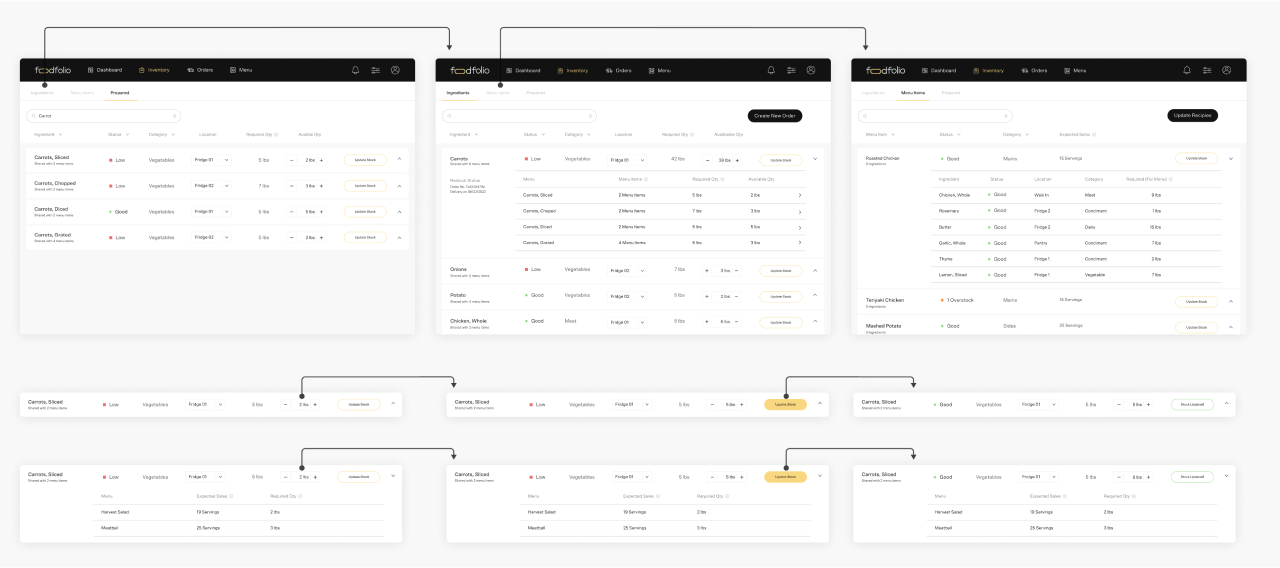
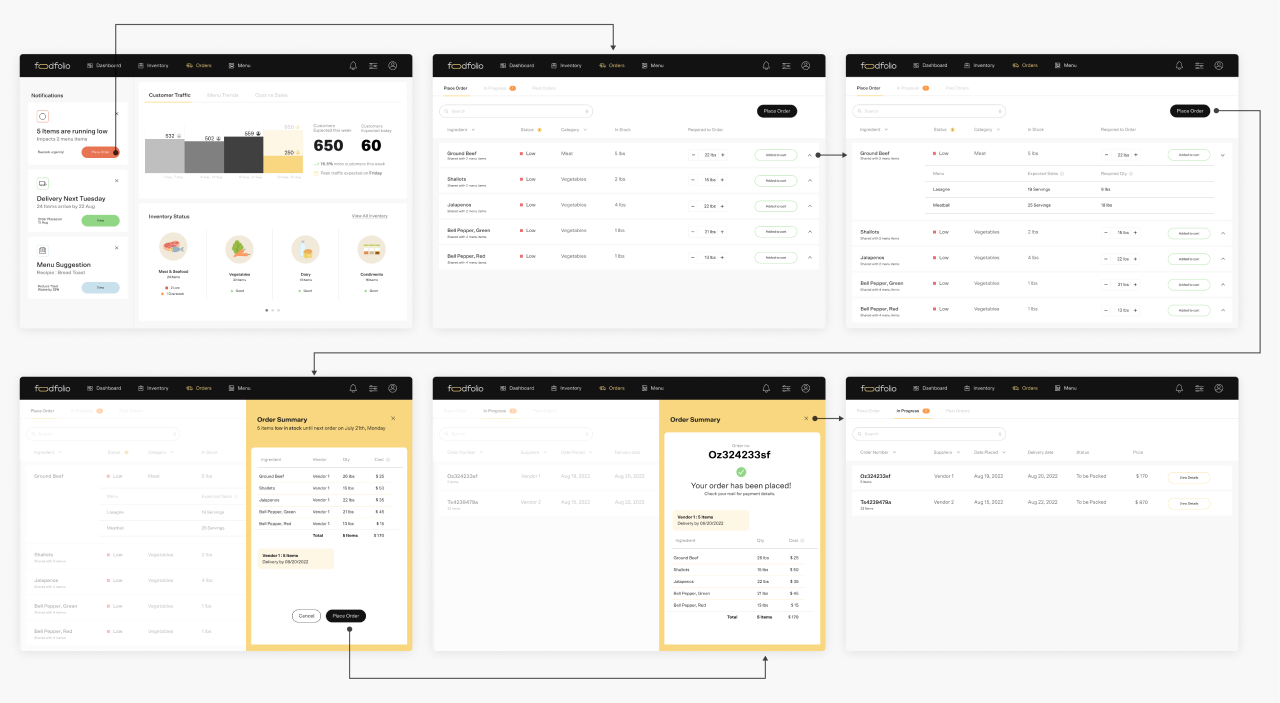
Landscape and User Research
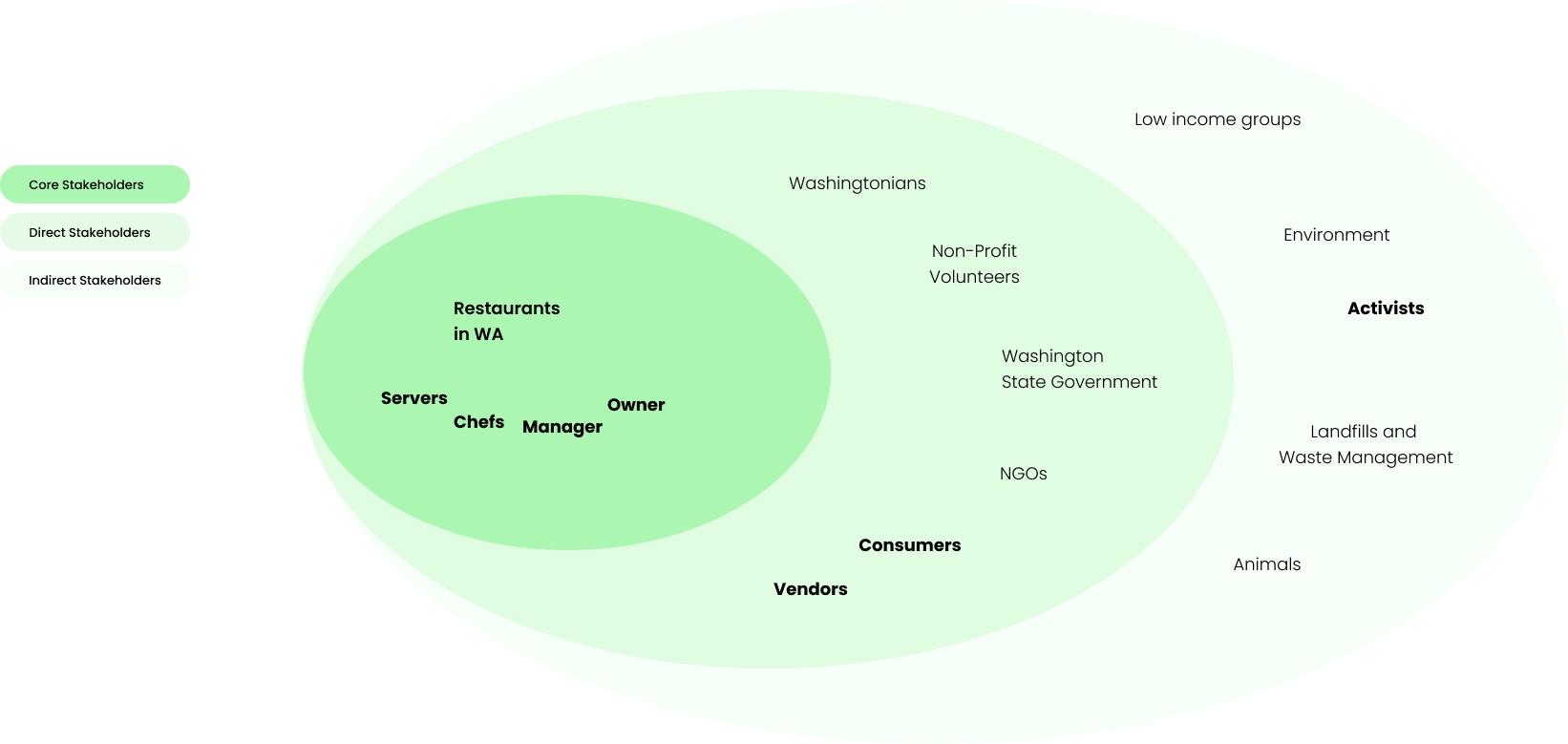
The field was new to us and we dived into research to understand what the gaps are, identify the barriers restaurants face when managing food and it's surplus. I lead user and landscape research in identifying insights and opportunities. My role included enabling and guiding the process, along with identifying the methods to use.
Semi Structured Interviews
We conducted 10 user interviews and 2 expert interviews to gain insight into the current food system, analyze and deep dive into pain points and find methods used to reduce waste. We then coded the data and used thematic analysis to make sense.
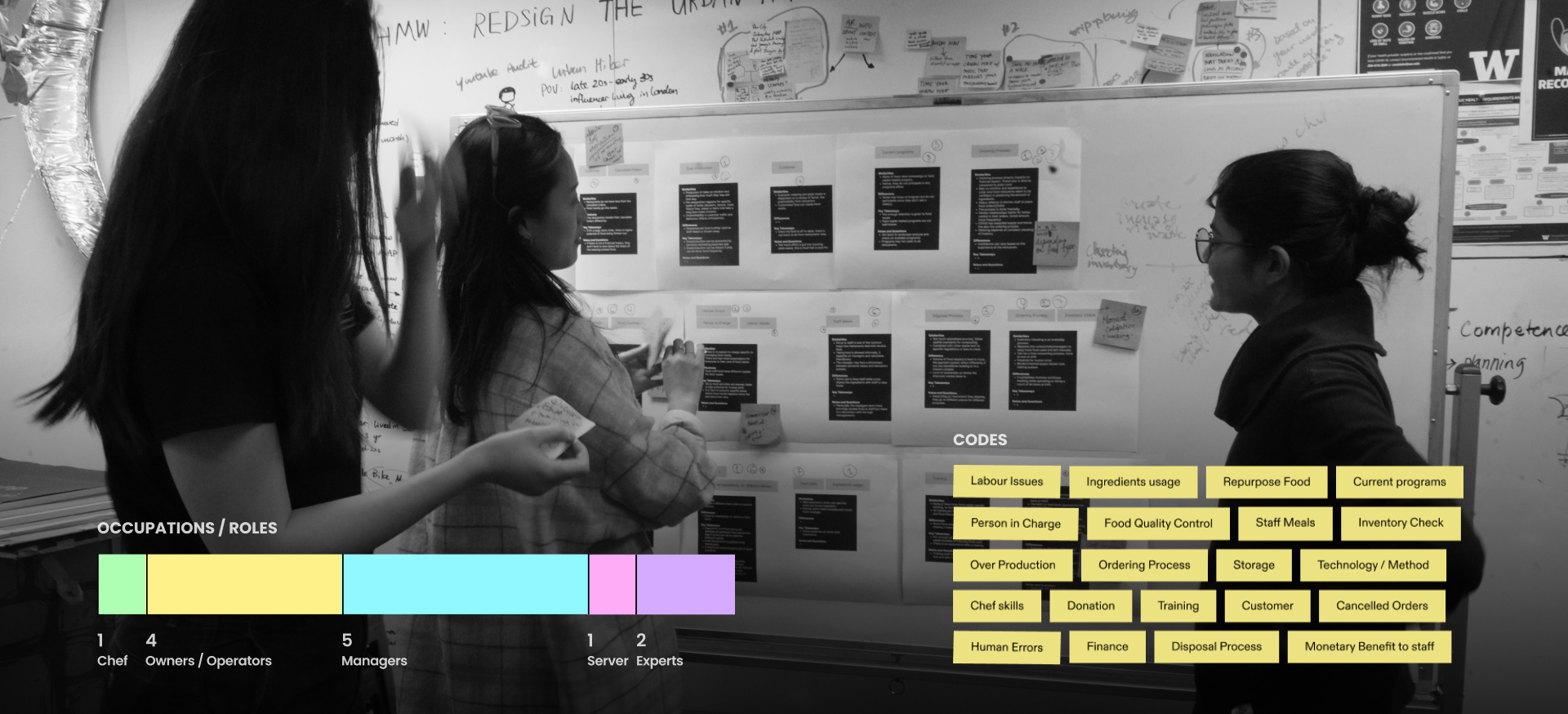
That's us analysing our findings. We spoke with various people in the industry and found themes in the responses.
Landscape Analysis
I led the efforts to study the complete production process and gain a deeper understanding of the work being done in the food service system. We analysed 20+ organisations to identify gaps in the market to recognise areas of opportunities.
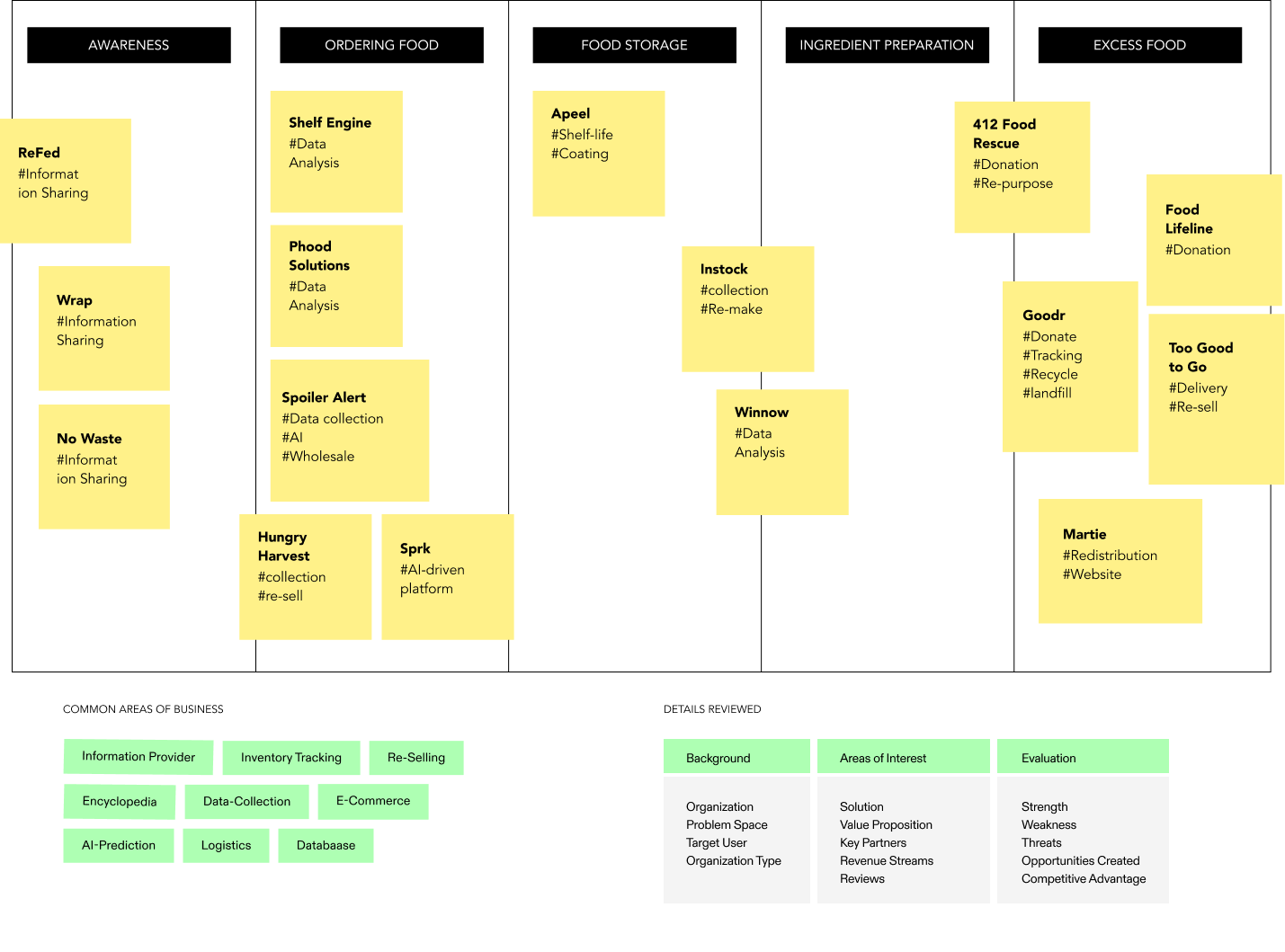
These are some of the solutions in the space that we mapped to stages in the process they solved for.
How does Food turn into waste? A Journey.
With the data and studies on the system we drew a journey evaluating the methods used in the places we talked to. The aim was to trace how food converts to waste.

We visualised how food turns into excess food, the contributors and mitigation strategies used.
Insights and Findings
From the themes mapped, we extracted multiple findings and insights, 3 of the most impactful ones are as below.
The 3 insights of 5 that we referred to in our process.
Opportunity Areas
- Establish an expectation that reducing food waste improves profit margin and encourage action.
- Minimize the discrepancy in ingredient needs and improve the precision in inventory management.
- Build a hassle free system that supports restaurants giving away excess food or reducing waste.
- Inculcate an understanding that the food waste problem is highly correlated with daily behaviors