Let’s Go
Designing an urban hike experience that creates meaningful connections with the city.
This was done as a part of a student project in MHCI+D.
My Role - Product Designer
I acted as an end-to-end product and service designer. My responsibilities included research, user journey maps, low & high fidelity app prototypes and product video.
Team - 4 Members
Claire Yi, Kelly Luo, Melanie Wells, Stephon Odom, Isha A
Duration - 6 Weeks
May 2022 - Jun 2022
Design Challenge
HMW design for the on-foot exploration experience to be immersive and allow meaningful connections with their urban environment?
Our challenge revolved around understanding how do we help urban hiking facilitate connection while improving the current experience?
Overview
What is Urban Hiking?
Urban hiking meant taking a walk in an urban environment with an intention to explore the space.
Who are our users?
Young crowd (20-30s) who are interested in exploring spaces and connecting with new urban environments.
Secondary Research Findings.
  1. People who explore on-foot feel greater ownership of a space and we wanted to explore that.
  2. People take urban hikes beyond physical fitness, It involves a sense of adventure.
  3. People plan and change their routes to pursue interesting experiences.
Our Concept
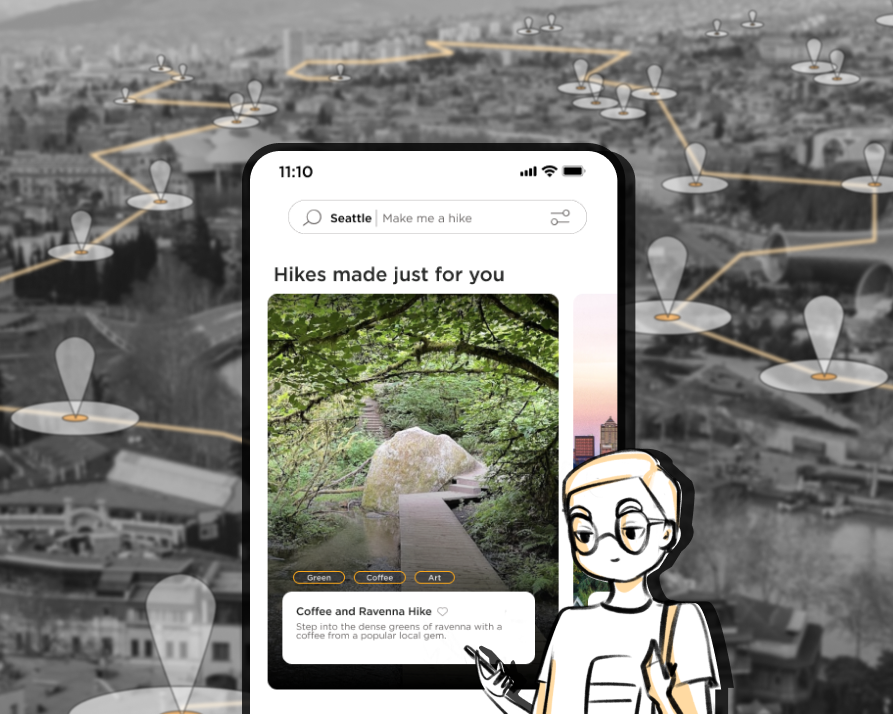
Let’s Go is a digital service that supports spontaneous & planned urban hikes and capturing memories created on the way.
Here is a concept video I developed that describes what Let’s go does.
Key Features
Let's Go
It starts here, at the Let's Go logo and opening screen.
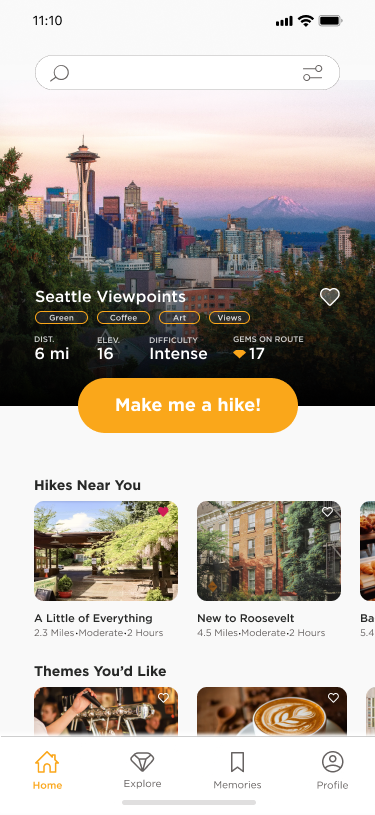
Home Screen
Landing provides suggestions to nearby hikes based on past hikes, these may be curated or generated.
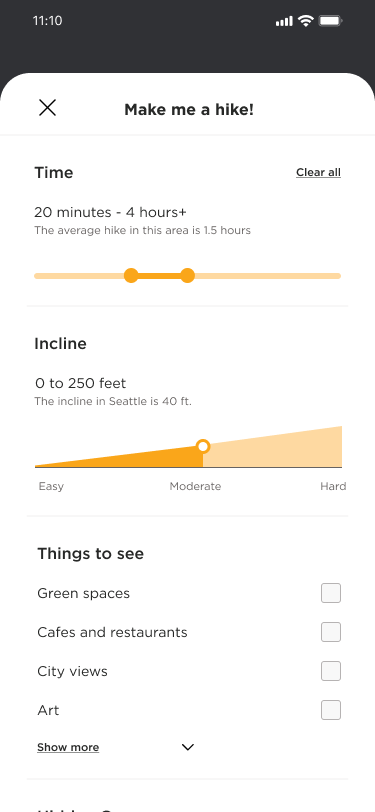
Make me a Hike
Input specific interest and preference to enable system to generate new hikes for you.
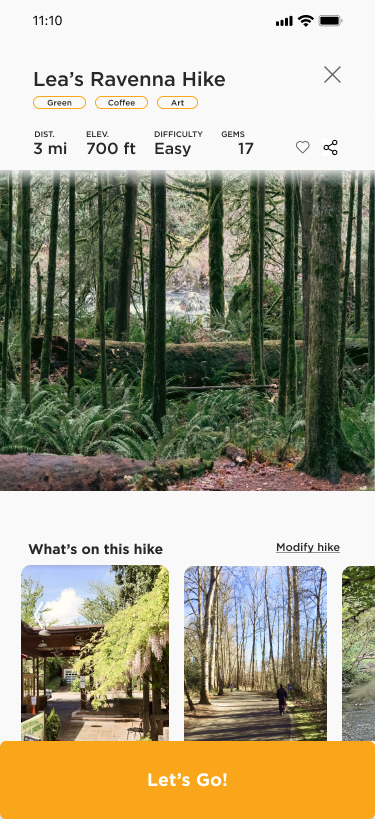
Hike Details
Look into the hidden gems and map of the route, modify hike with other gems you like. Save or take it immediately.
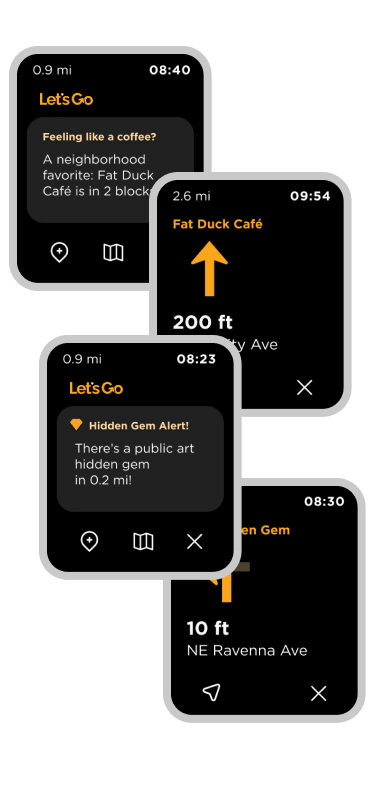
Apple Watch Integrations
Nearby gems are notified, take detours on hike to visit gem that strike you fancy.
Memory Stamps
Add audio-visual stamps on special locations on your route and look back onto to your memories in the area.
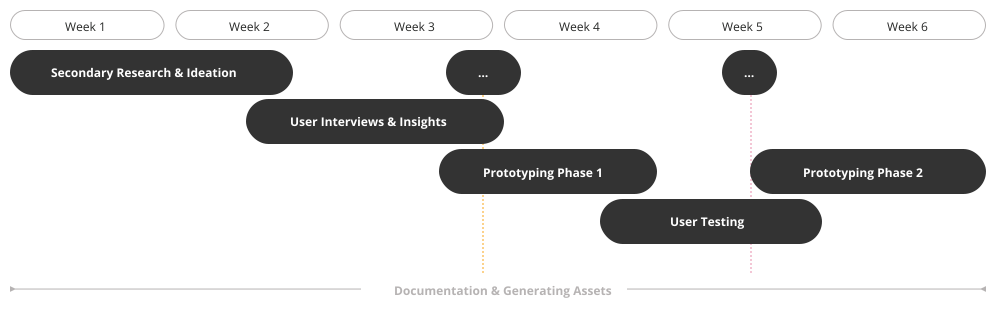
Process Timeline
Although I played a key role in all the listed tasks, I took over significant responsibility on tasks highlighted.
Research
Social listening
Desk Research
Research Plan
User Interviews
Thematic Analysis
Insight generation
Ideation
User Personas
Brainstorming
Affinity Map
Downselection
Competitive Analysis
Lean Canvas
Journey Map
Prototyping
Information Arch
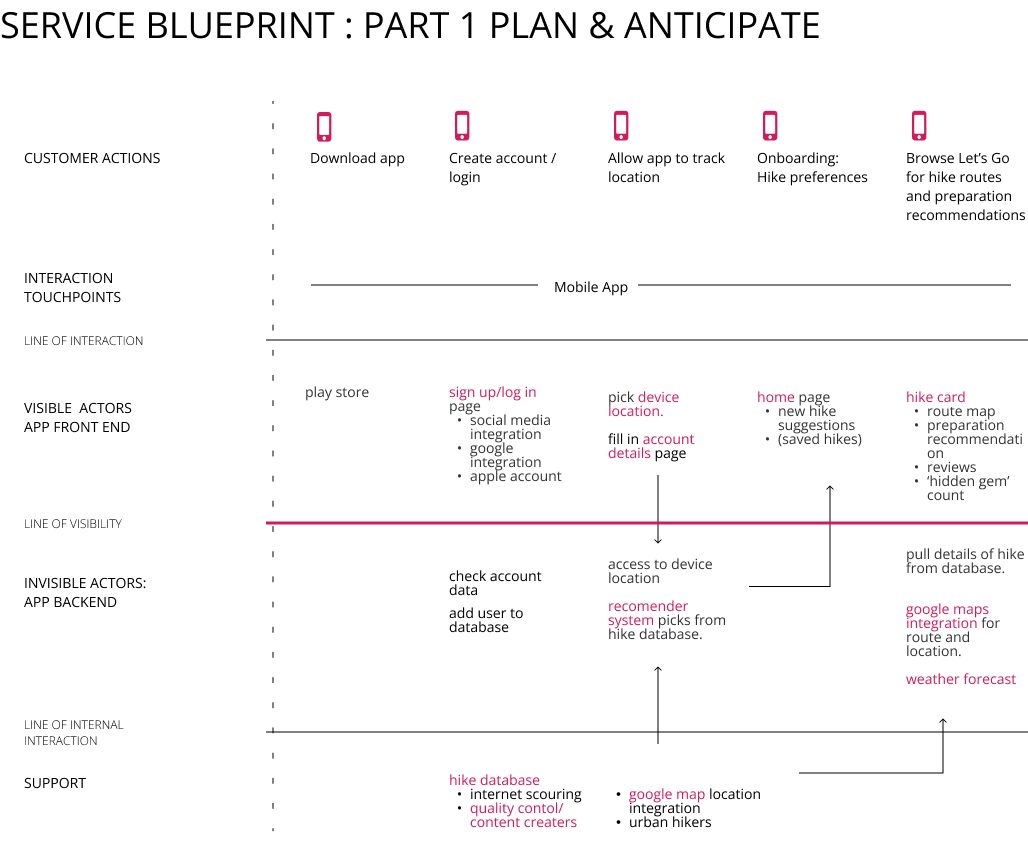
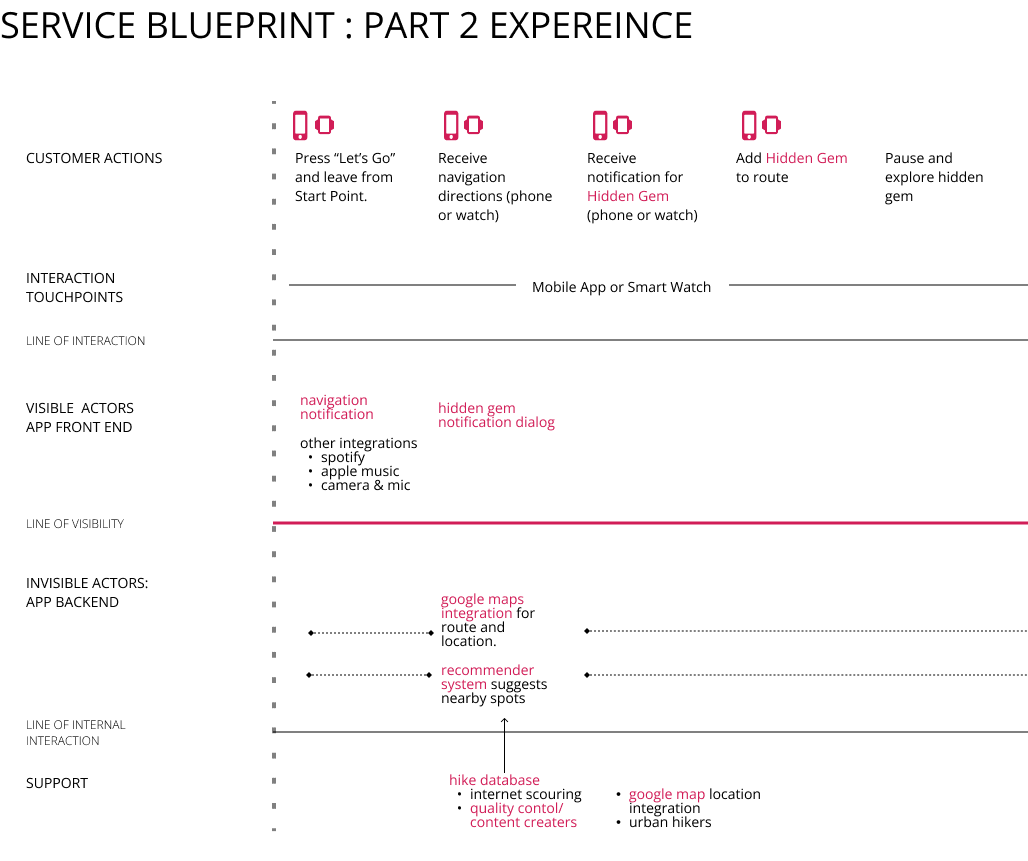
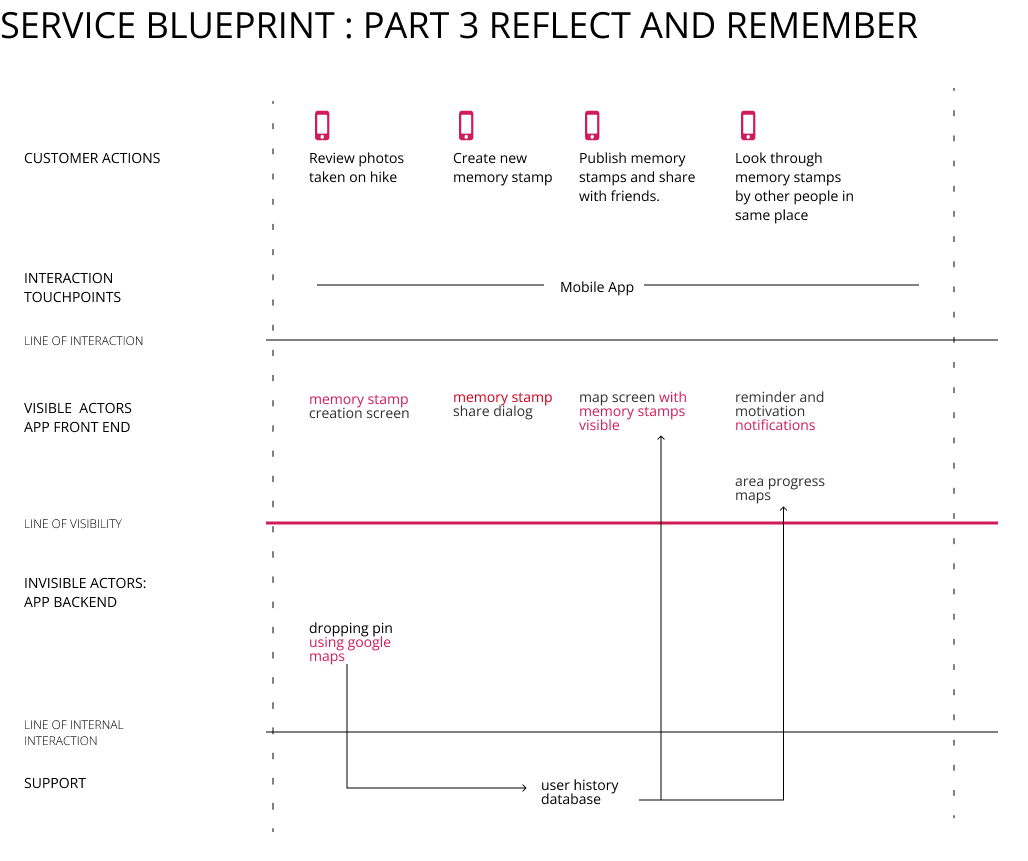
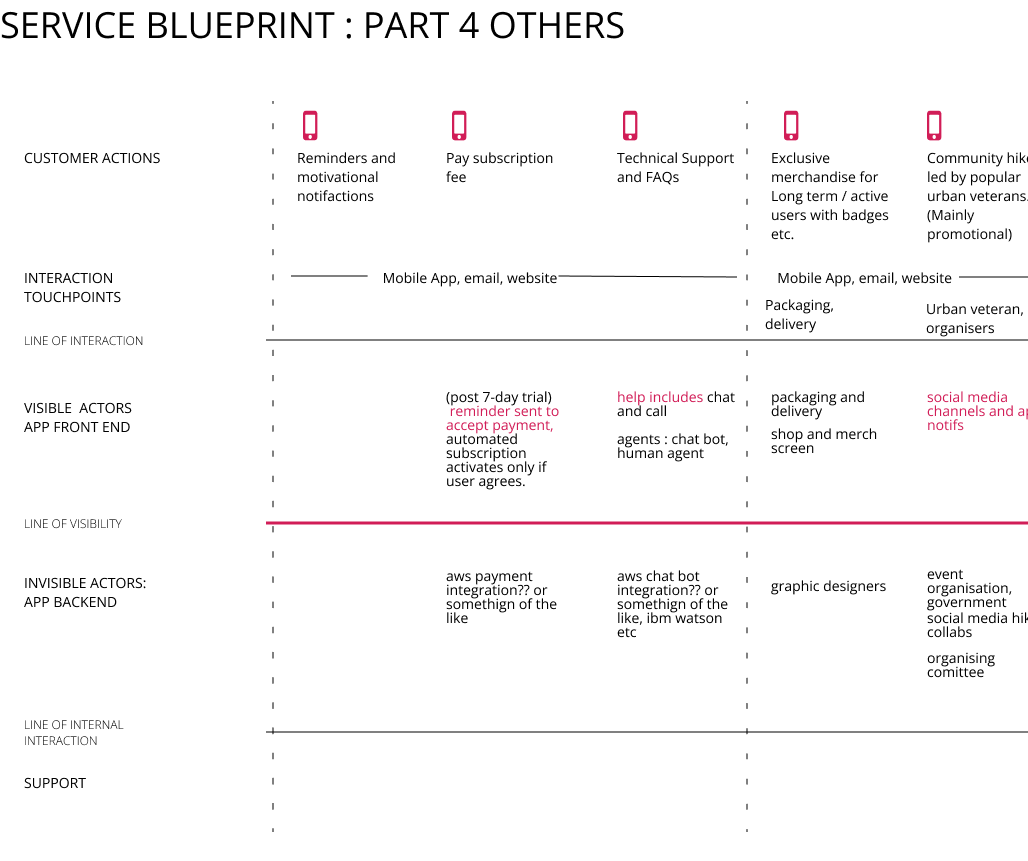
Service Blueprint
App Prototypes
Video Prototyping
Evaluation
Wizard of Oz
Feature Evaluation
Ideation
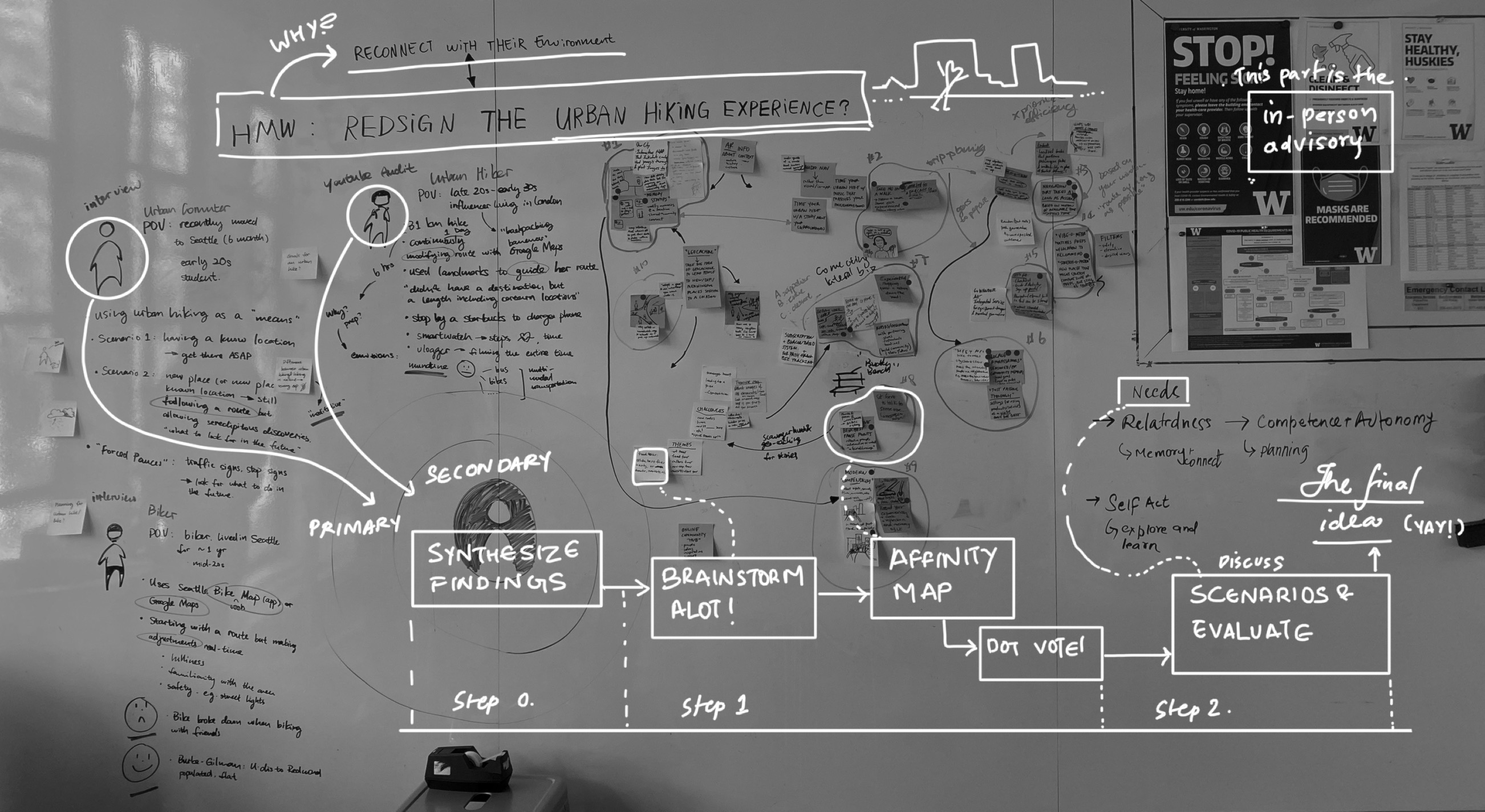
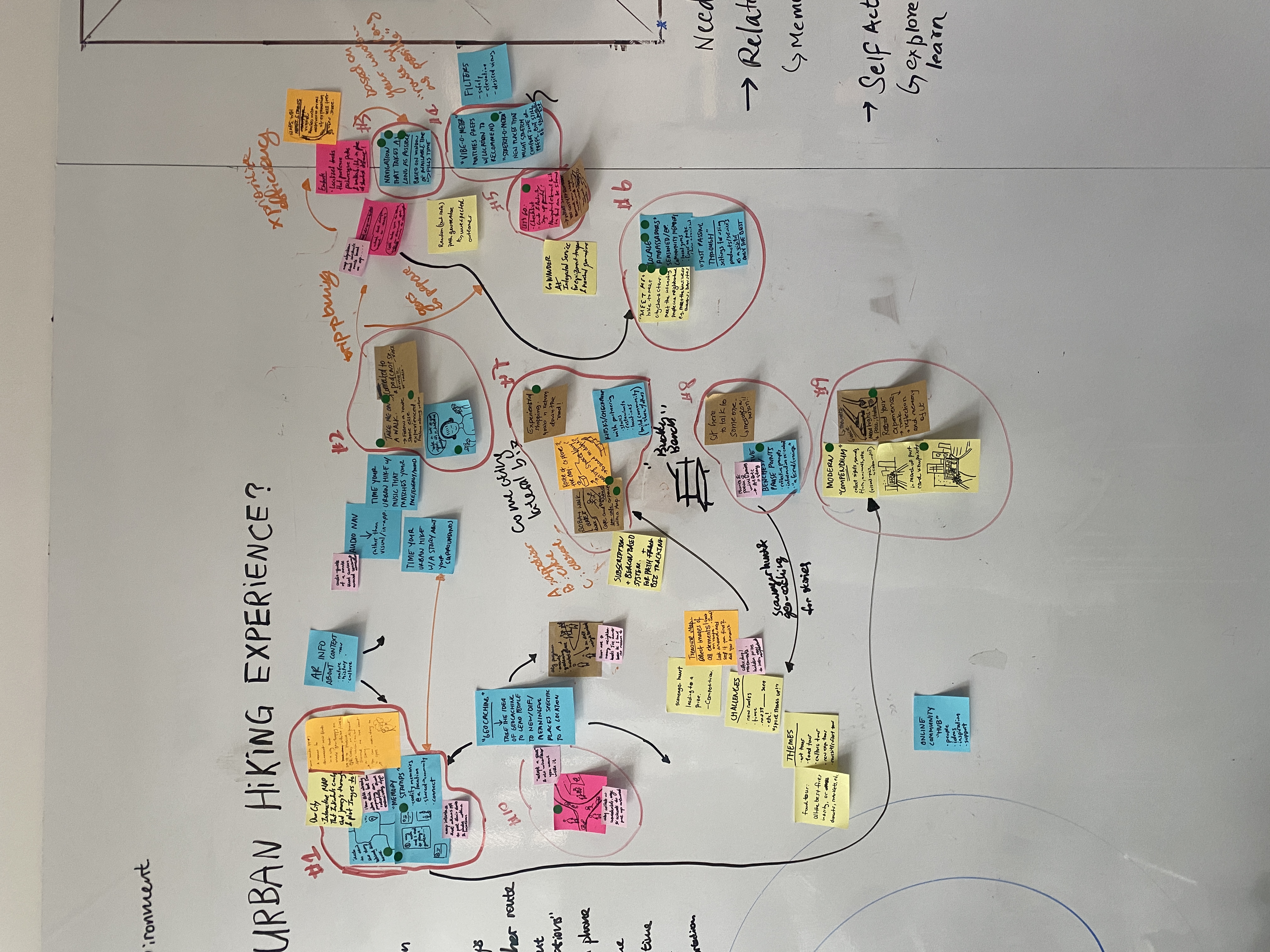
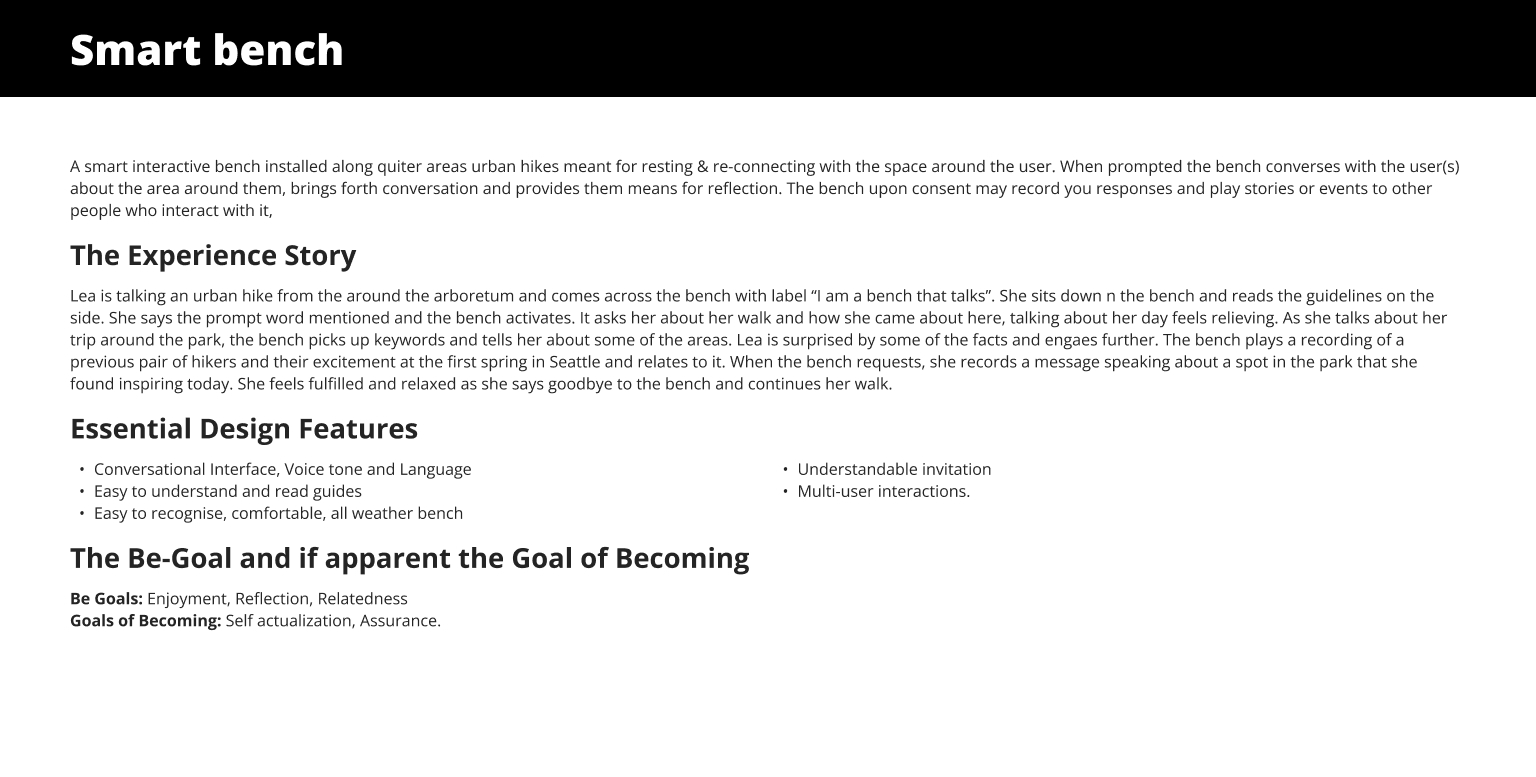
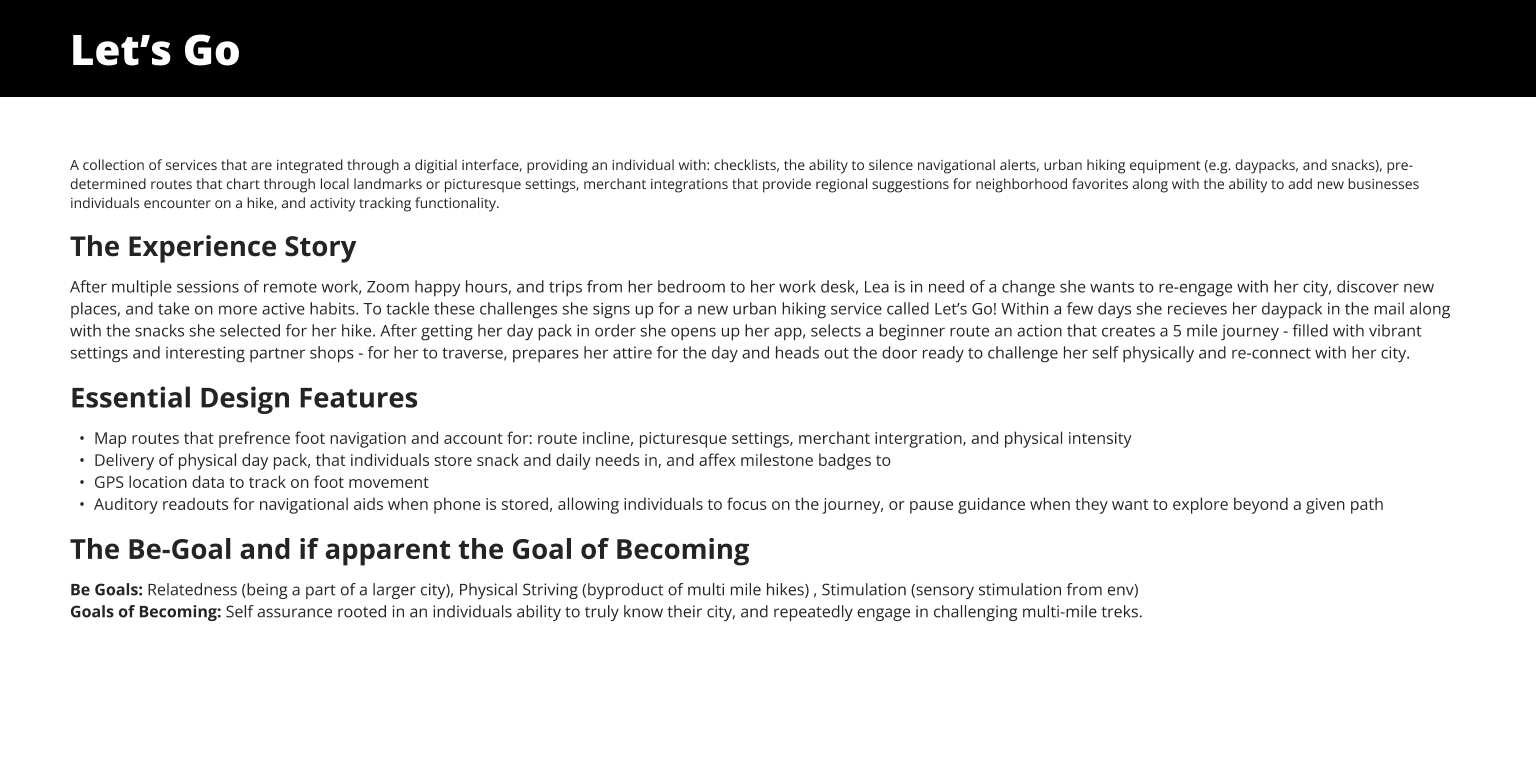
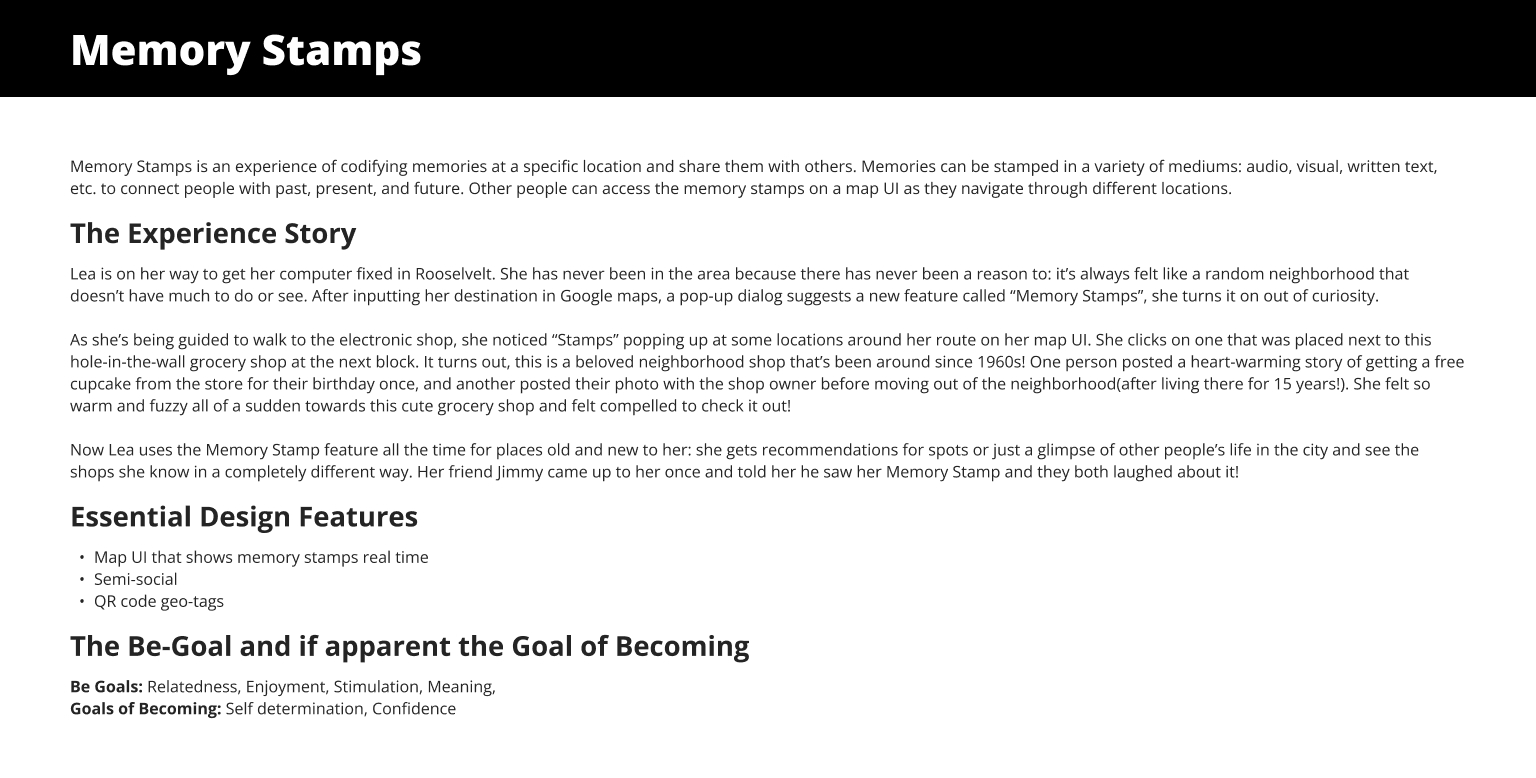
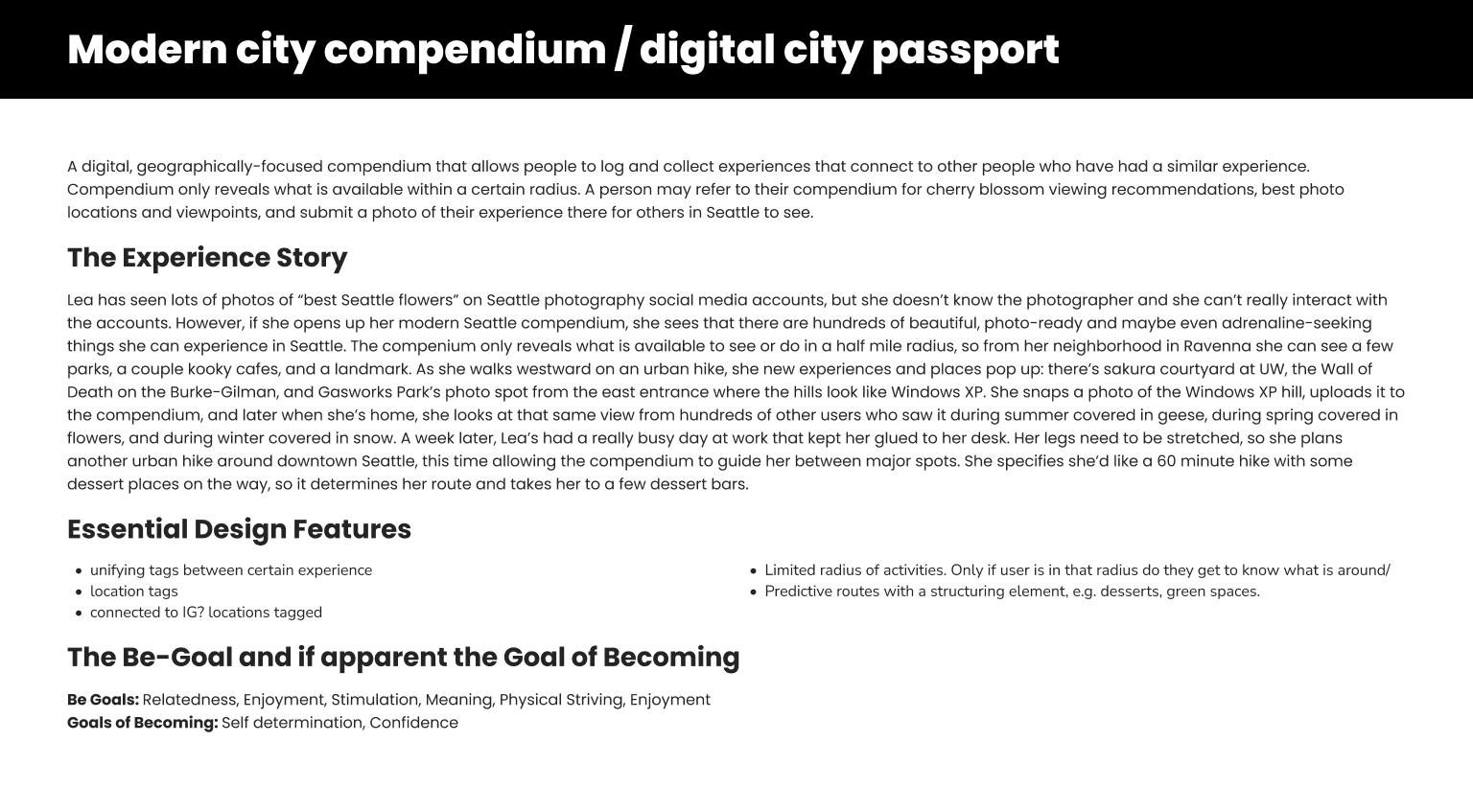
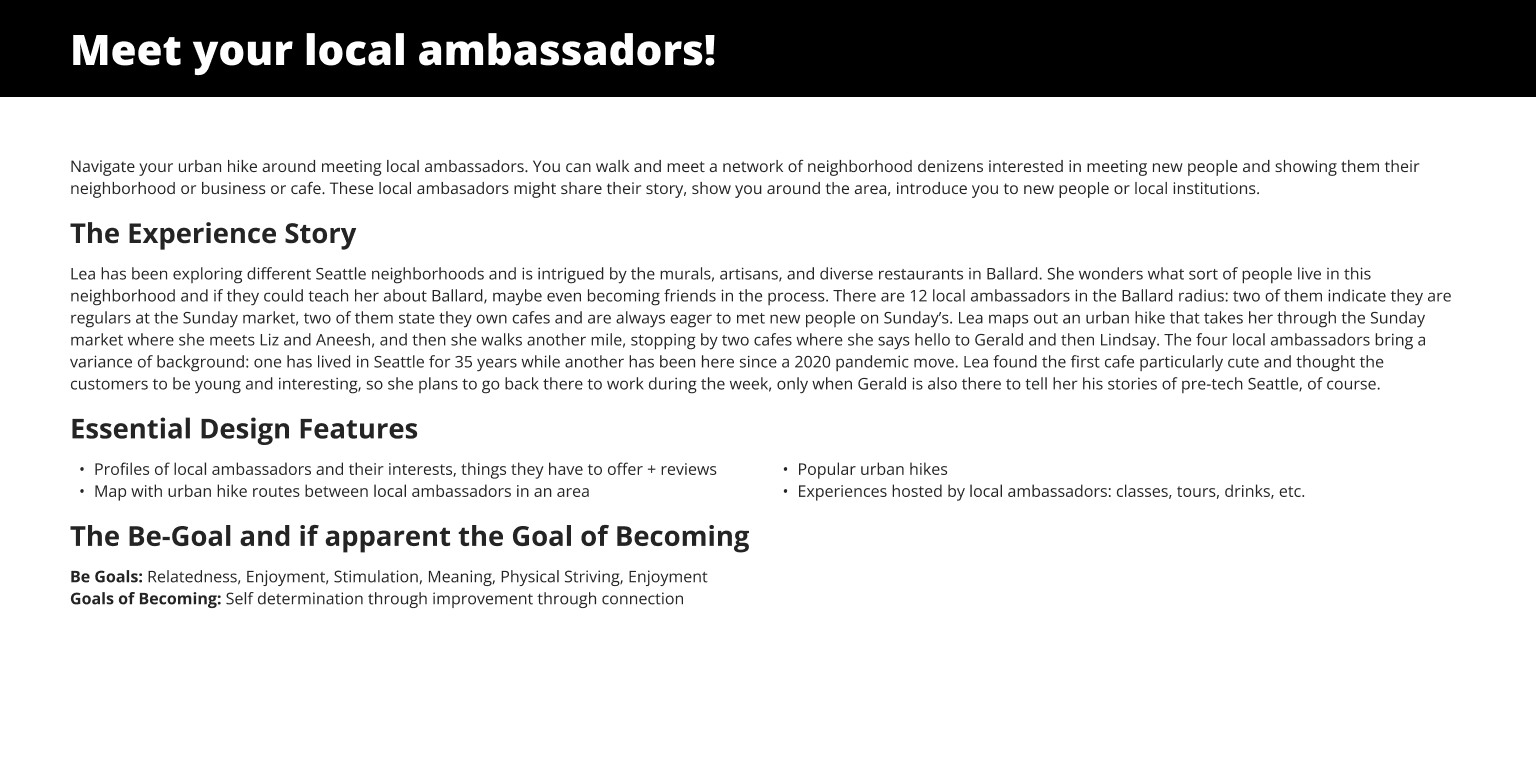
From our desk research we came up with 40+ ideas. These were affinity mapped and then dot voted.
If our ideation process could be summed up in a picture, this one would be the closest one.
We created scenarios for top 5 ideas and evaluated them based on the goals of becoming they tied back to and on how well those goals provide for our design challenge.
Downselection
  1. Brainstorming & Affinity Map : With desk research we came up with 40+ ideas and affinity mapped them.
  2. Dot voting & Scenarios : We did a dot voting exercise and created scenarios for top 5 ideas
  3. Selecting Final Idea: Our criteria was how close the idea provided for hedonic be goals of self improvement and development.
    Here is the set of 5 ideas and their scenarios from our initial downselection if you'd like to read through them. Click to expand them!
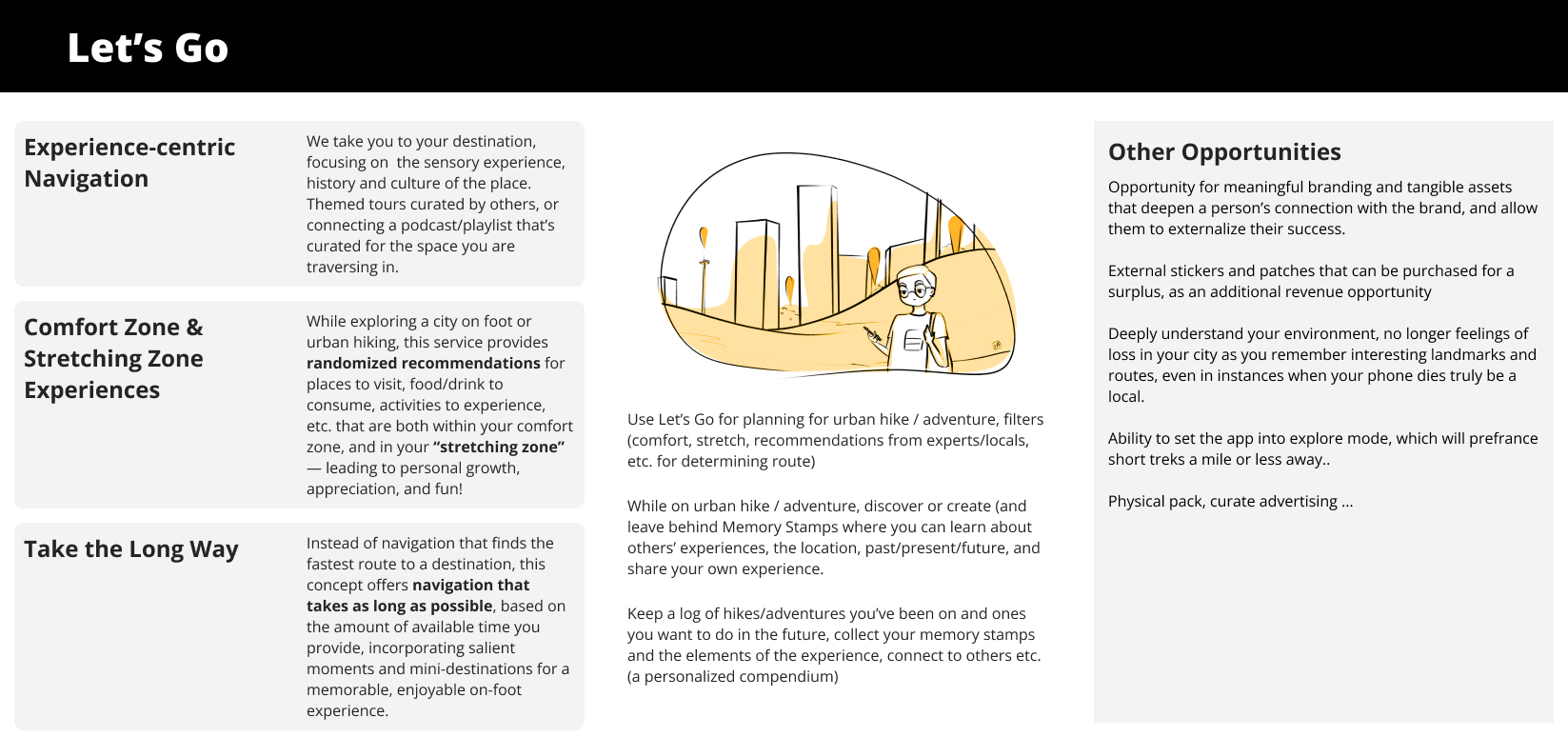
    With our evaluations we restructured the idea with most value into a final concept, laying out the potential features. Introducing our first draft of Let's Go below!
    This was our initial concept. We were pretty excited to explore this! Click to expland.
    User Interviews & primary research
    We needed to refine the multiple offerings Let’s go could provide and conducted primary research. We conducted 6 semi-structured interviews with a short memory sketch activity. My main role was in drafting the research plan and then synthesizing findings from the interviews into insights and journey map.
    Key Findings
    1. Planning phase should consider transportation, route walkability and landscape.
    2. An ideal urban hike experience should allow time and space for in-the-moment decisions.
    3. Digital experiences can be disruptive but when done right, they enhance experience.
    4. People want to commemorate a hike in a variety of ways at various moments.
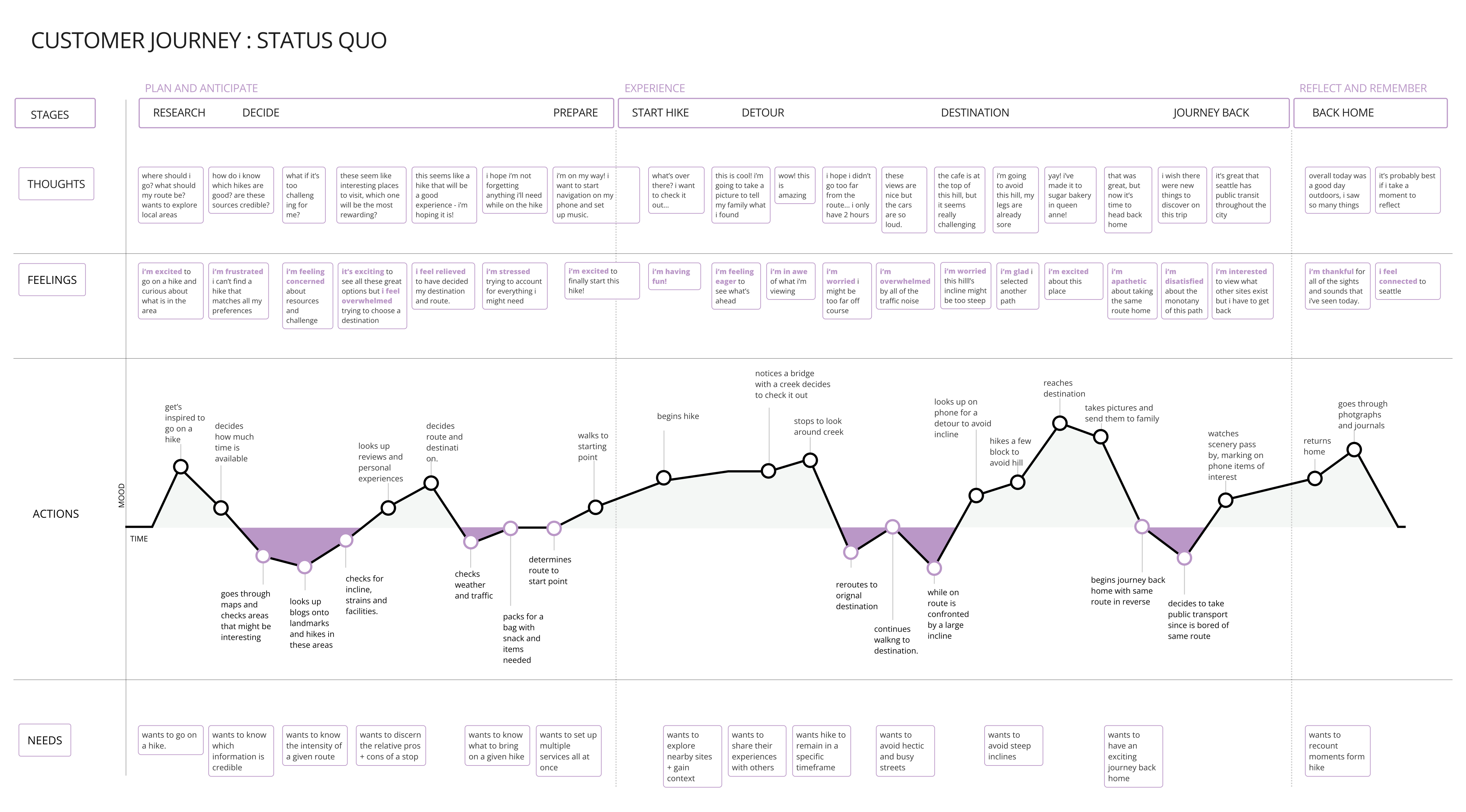
    User Journey & Pain points
    Here is the customer journey I synthesized from our findings. Hover to zoom.
    Planning Stage
    Researching and planning a rewarding hike that will reflect a hiker’s specific preferences represents a large cognitive load for hikers.
    Experiencing Stage
    There is little flexibility to explore off-route spontaneously or avoid certain obstacles without inconveniencing the hiker with re-routing.

    It can get boring to take the exact same route back, especially after experiencing an emotional peak
    Reflecting Stage
    There is no integrated way to capture the multi-faceted memory of the hiking experience.
    Refining our Idea
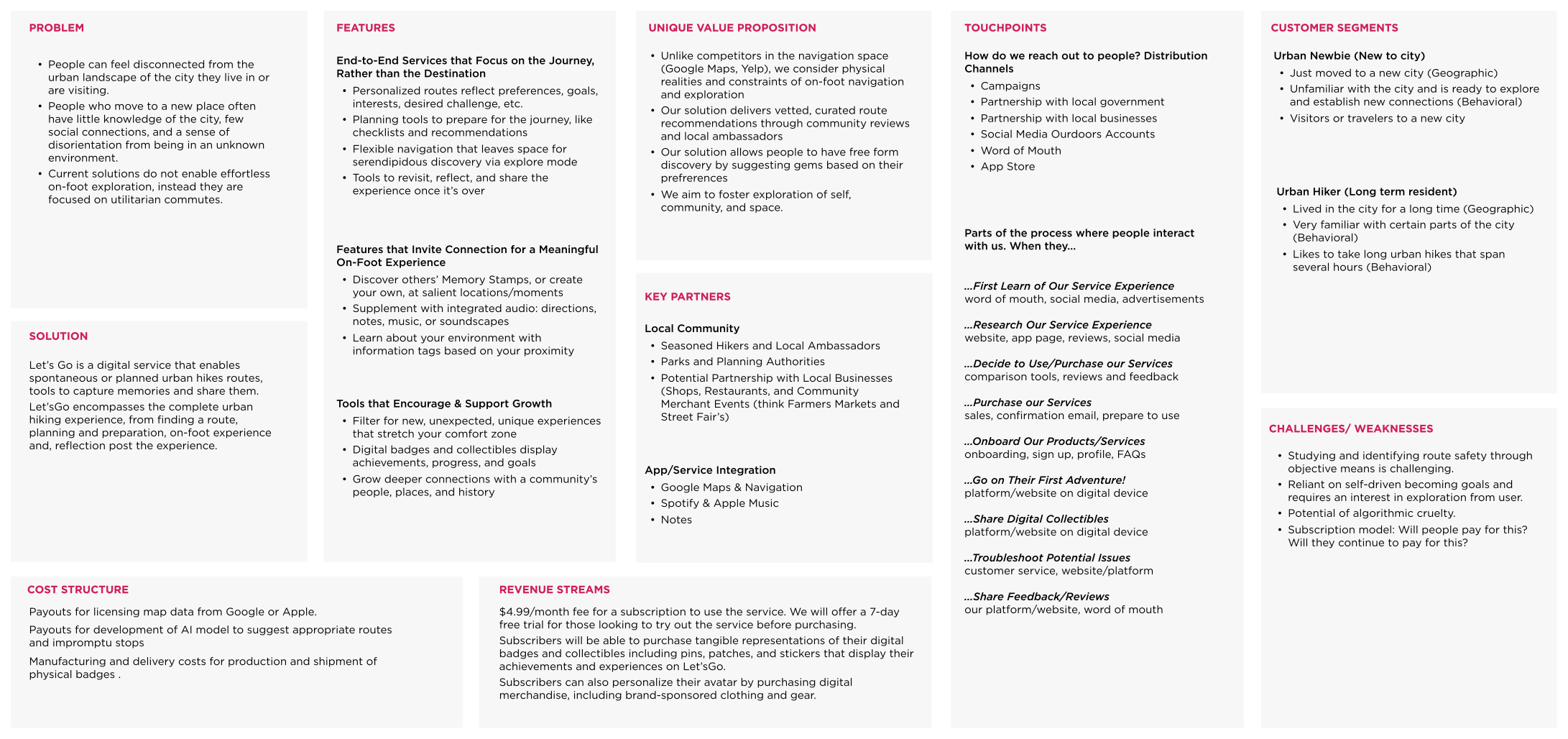
    With our findings as our guiding light we moved on to refine our idea and scope down to features that mattered. I led making the assets below to distill our final offerings and create a prioritised key path to prototype and test.
    Experience Prototyping : wizard of oz
    We prototyped the idea with wizard of oz with 3 participants to gain insight into what kind of interactions are expected.
    Above is an experience test in progress, we embodied our app and recorded the process.
    Key Findings
    1. User wanted more customizability than just including preferences.
    2. User wants more points of excitement of a perspective route to be highlighted.
    3. Let’s Go must cater to a lot of spontaneity and in-the-moment changes.
    4. Memory stamps should be easy to create and accessed within a collection.
    Expected User Journey
    I started defining a customer journey from planning to reflection, capturing actions and thoughts leading to fulfillment of user needs.
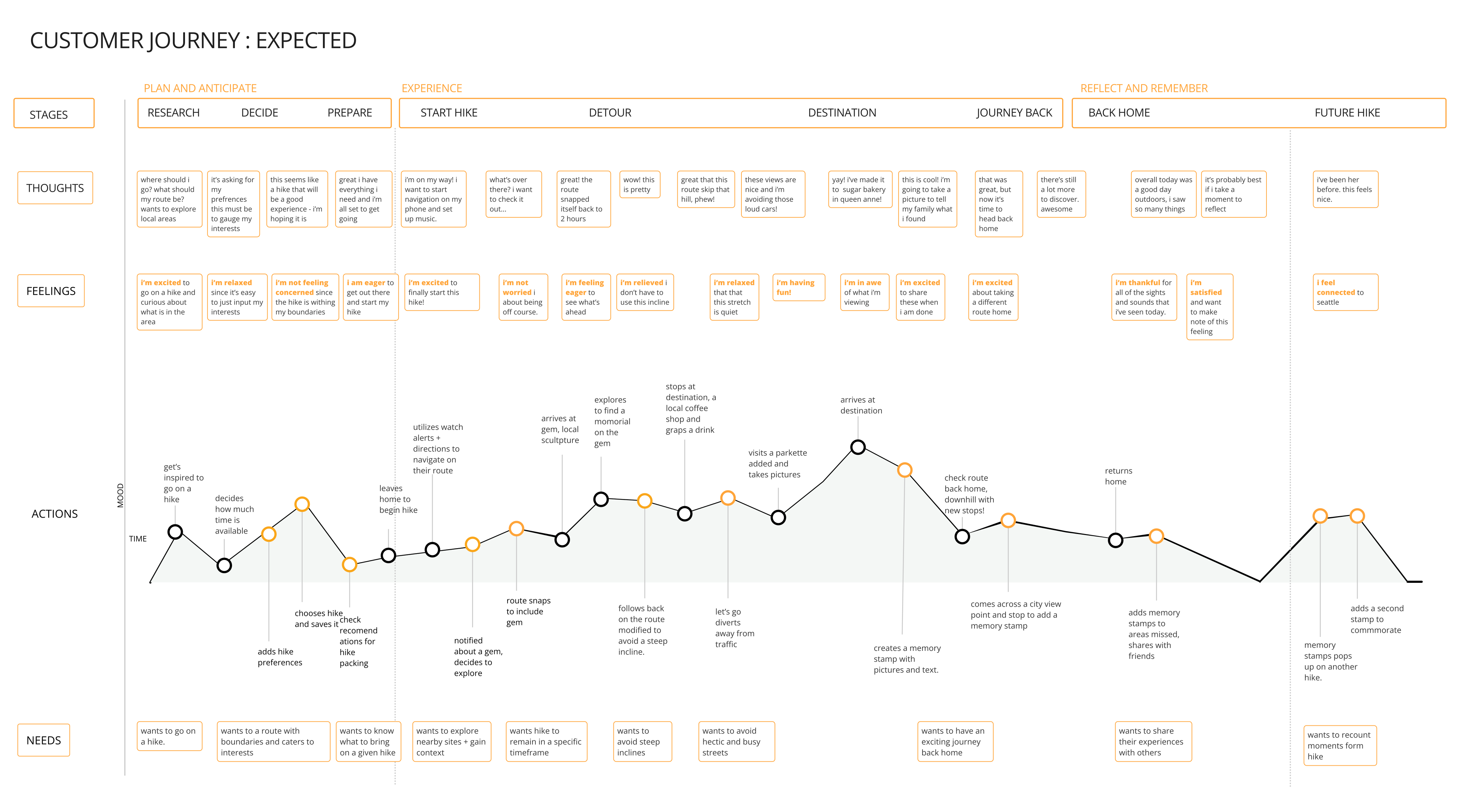
    Here is the expected customer journey map I synthesized for our refined offerings. Hover to zoom.
    Planning Stage
    Let's go creates quality hikes efficiently based on user preferences.

    It Informs hiker of challenges on the route before they choose a hike.
    Experiencing Stage
    Let's go has flexible navigation for spontaneity and exploration on a route.

    Provides an interesting and unique route back home.
    Reflecting Stage
    Let's go includes geo-tagged audio-visual tools for meaningful codification of memories that can be shared with friends and family.
    Making the Let's Go App
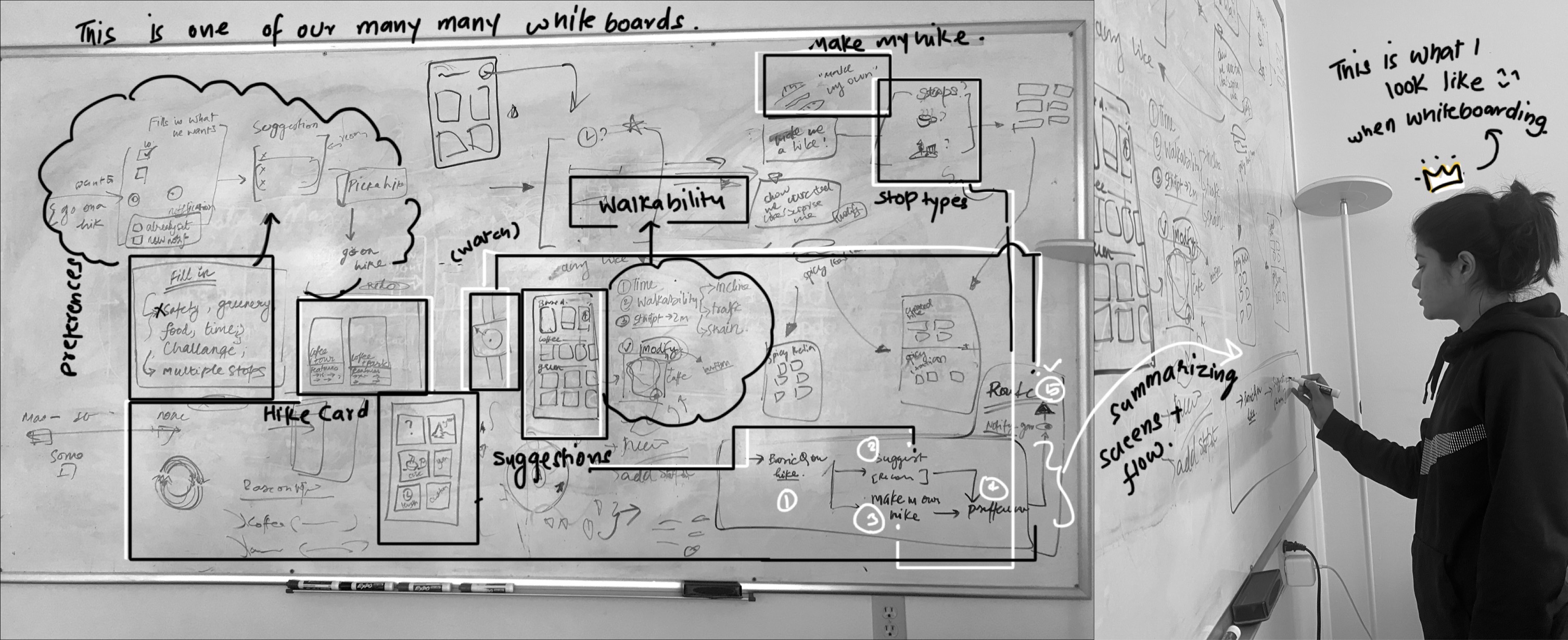
    While my teammates defined the visual schema, I looked into user flows. We then whiteboarded and sketched screens in the key path.
    Whiteboarding
    That's me whiteboarding the flow from search to selection with the team. Hover!
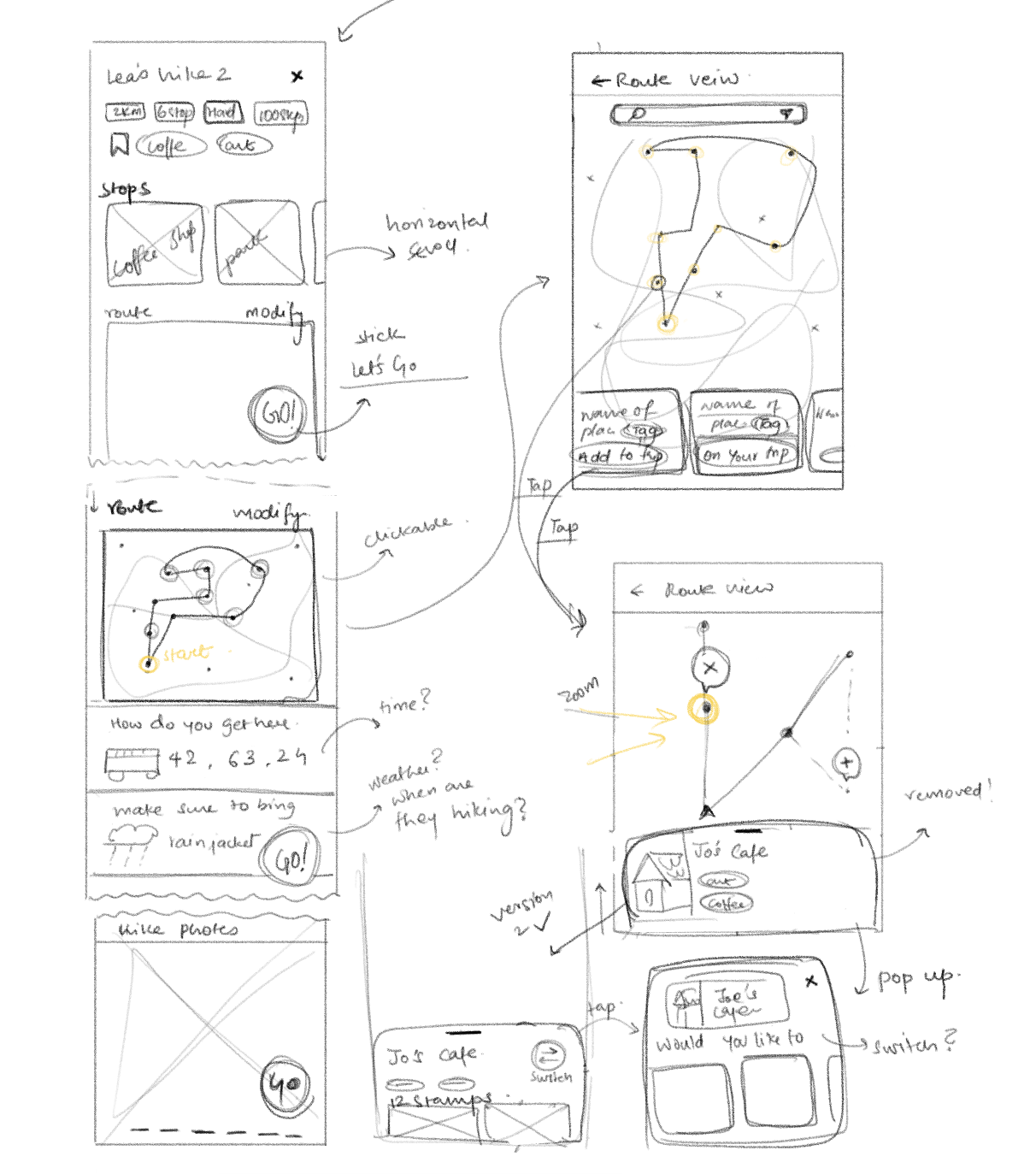
    With the flows in mind we began sketching shots layouts and UI screens. I was largely involved in the screens for hike suggestions, hike details and navigation.
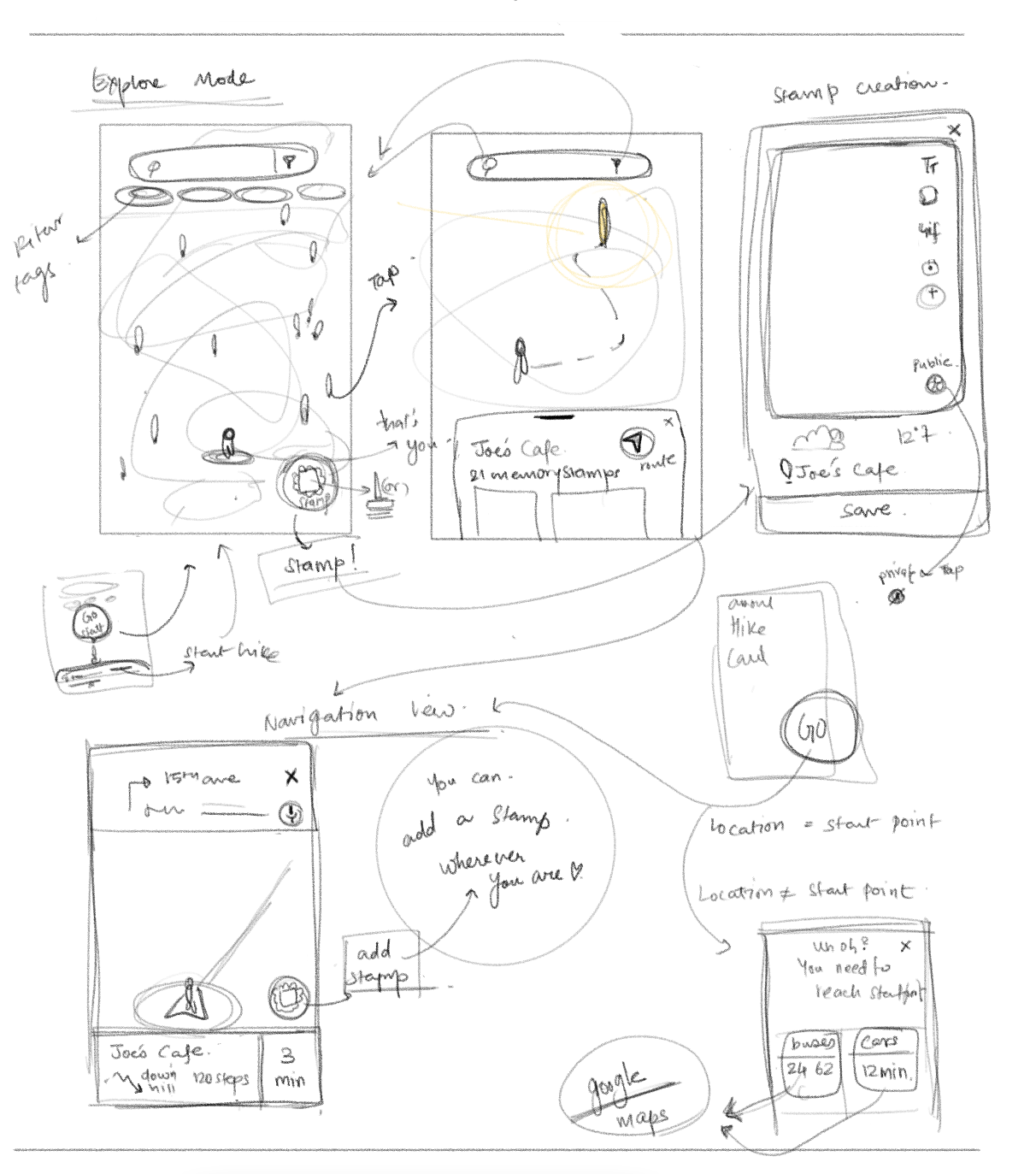
    These are a few screens sketched out. I took responsibility over the screens from hike details to navigation.
    With the feedback from our user testing, Stephon and I suggested the "explore mode" to provide even more spontaneity and freedom to the users in their hike. Click here to go back up to the video and prototype!
    Reflections & Learnings
    If I had more time I would...
    - Deep dive on accessibility in urban hikes.
    - Look into building a community for urban hikers.
    What went well?
    - Differentiating between planning, experiencing and remembering phases helped us define them better. We referred to Kahneman's principles very often.
    What could be better?
    - We took a while to zero in on our problem space and could have benefitted from scoping it early on.
    More Work